
UAE Work Visa vs Residence Visa for Pakistanis 2026
PardesRaah
5/24/20268 min read
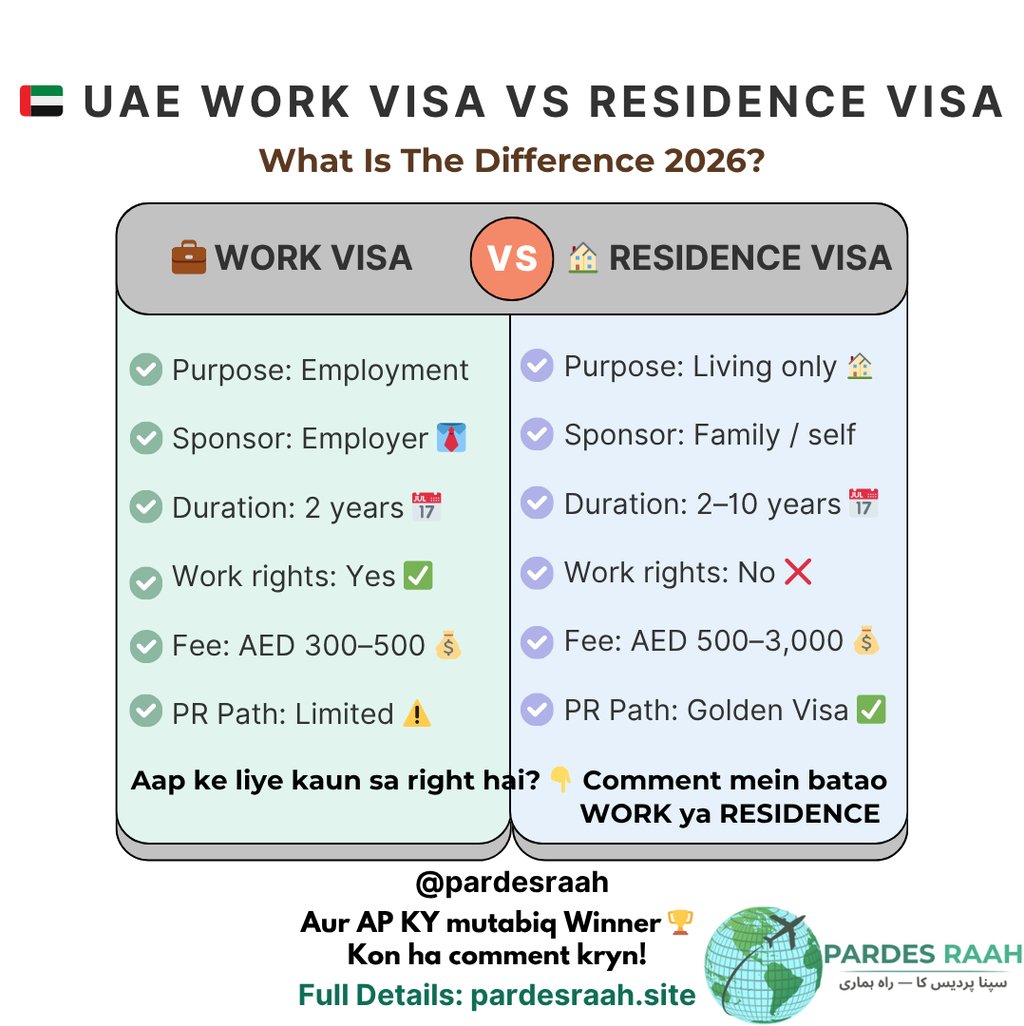
Dubai mein rehna aur kaam karna — dono alag cheezein hain. Sahi visa choose karo aur apna UAE sapna sahi raah pe shuru karo.
UAE Work Visa vs UAE Residence Visa — What Is The Difference
Introduction:
The United Arab Emirates is home to over 1.5 million Pakistani expatriates — making it the single largest destination for Pakistani workers and families living abroad. Every year thousands of new Pakistani applicants begin the process of moving to the UAE with dreams of better income, a stable life, and the chance to give their families a brighter future. But one of the most common and costly mistakes Pakistani applicants make right at the beginning is confusing the UAE Work Visa with the UAE Residence Visa. These are two completely different visa categories with different purposes, different sponsors, different durations, different rights, and different pathways — and choosing the wrong one can delay your UAE plans significantly. In 2026, this guide gives Pakistani applicants a complete and clear comparison of both visa types so you can choose the right option from the very start.
What Is the UAE Work Visa?
The UAE Work Visa is an official entry and residence permit that allows foreign nationals to live and work in the United Arab Emirates under the direct sponsorship of a UAE-registered employer. For Pakistani workers it is the most common pathway to the UAE and is processed through the employer's relationship with the UAE Ministry of Human Resources and Emiratisation, known as MOHRE. The work visa is linked directly to your employment contract and your specific employer — meaning if you change jobs you must transfer your visa to the new employer or the old visa must be cancelled. The UAE Work Visa is typically valid for 2 years and is renewable upon contract renewal. It grants the holder the legal right to live and work in the UAE throughout its validity period.
What Is the UAE Residence Visa?
The UAE Residence Visa is an official permit that allows foreign nationals to legally reside in the United Arab Emirates without being tied to employment sponsorship. Unlike the work visa which is always employer-sponsored, the UAE Residence Visa can be sponsored by a family member who is already legally resident in the UAE, by the applicant themselves under certain investment or property ownership categories, or through programs like the UAE Golden Visa. The residence visa grants the holder the right to live in the UAE legally but does not automatically grant the right to work — a separate work permit must be obtained if the residence visa holder wishes to take up employment. The UAE Residence Visa varies in duration from 2 years for standard family-sponsored residence to 10 years for the Golden Visa category.
Who Should Read This Guide?
This guide is for Pakistani nationals who are planning to move to the UAE in 2026 and need to understand which visa type is appropriate for their specific situation. It is particularly useful for Pakistani workers who have received a job offer from a UAE employer, Pakistani families where one member is already in the UAE and wants to sponsor family members, Pakistani investors or property owners exploring self-sponsored residence options, and Pakistani professionals considering the UAE Golden Visa as a long-term settlement pathway.
Purpose and Sponsorship:
The most fundamental difference between the UAE Work Visa and the UAE Residence Visa is their purpose and the nature of the sponsorship behind them.
The UAE Work Visa exists for one specific purpose — to allow a Pakistani national to live in the UAE and work for a specific UAE-registered employer who is acting as their official sponsor. The entire visa is built around the employment relationship and the employer takes legal responsibility for the visa holder during their stay.
The UAE Residence Visa serves a broader purpose — it allows Pakistani nationals to legally reside in the UAE under a range of sponsorship arrangements that are not tied to employment. A Pakistani man working in the UAE on a work visa can sponsor a UAE Residence Visa for his wife, children, and in some cases his parents — allowing them to live with him in the UAE without needing their own jobs. Pakistani investors who purchase property worth at least AED 750,000 in the UAE can self-sponsor their own residence visa. Pakistani professionals who qualify for the UAE Golden Visa can obtain a 10-year self-sponsored residence visa without needing an employer or family sponsor at all.
Work Rights:
This is a critically important distinction that many Pakistani applicants overlook.
A UAE Work Visa holder has full and explicit legal right to work for their sponsoring employer in the UAE. Their job title, salary, and working conditions are registered with MOHRE and are legally protected under UAE labour law. Working for any employer other than the sponsoring employer on a work visa is illegal without a formal transfer of sponsorship.
A UAE Residence Visa holder does not automatically have the right to work in the UAE. The residence visa grants the right to reside in the country — nothing more. If a Pakistani national on a residence visa wants to take up employment in the UAE they must obtain a separate work permit through their employer. Pakistani women sponsored on a family residence visa by their husbands, for example, must obtain their own work permit before legally taking up any form of employment. This distinction is one of the most misunderstood aspects of the UAE visa system among Pakistani applicants and clarity on this point can prevent serious legal complications.
Duration and Validity:
The UAE Work Visa is typically issued for a period of 2 years and is directly tied to the duration of the employment contract. Upon renewal of the employment contract the work visa can be renewed for another 2-year period. If the employment contract ends the work visa becomes invalid and the holder has a grace period to either find new employment and transfer their visa or leave the UAE.
The UAE Residence Visa offers more flexibility in duration. Standard family-sponsored residence visas are typically issued for 2 years and are renewable as long as the sponsoring family member maintains their own valid UAE residence or work status. Self-sponsored investor residence visas are typically issued for 2 to 3 years. The UAE Golden Visa — the most premium residence visa category — is issued for 10 years and is renewable without requiring an employer sponsor or family sponsor. For Pakistani families looking for long-term stability in the UAE the Golden Visa provides the most secure and flexible residence option available in 2026.
Fees:
The cost difference between the two visa types is significant and Pakistani applicants must budget accordingly.
The UAE Work Visa fee is typically AED 300 to AED 500 for the visa itself and in most cases this fee is paid by the sponsoring UAE employer as part of the employment arrangement. Pakistani workers should confirm with their employer before signing any contract whether the visa fee will be covered by the company or deducted from the worker's salary.
The UAE Residence Visa fee varies significantly depending on the category and duration. A standard 2-year family residence visa costs approximately AED 500 to AED 1,500 per person including all associated processing fees. An investor residence visa costs approximately AED 1,000 to AED 2,000. The UAE Golden Visa application fee is approximately AED 2,800 for the 10-year visa including processing charges. Pakistani families sponsoring multiple family members on residence visas must multiply these costs by the number of dependents being sponsored and budget for the full combined cost upfront.
Emirates ID:
Both UAE Work Visa holders and UAE Residence Visa holders must apply for an Emirates ID within 30 days of their visa being stamped. The Emirates ID is the official identity document for all UAE residents and is required for everything from opening a bank account to accessing healthcare, renting accommodation, and renewing visas. The Emirates ID fee is approximately AED 100 to AED 370 depending on the visa duration. Missing the 30-day Emirates ID application deadline results in daily fines of AED 20 per day. Pakistani applicants must treat Emirates ID registration as an immediate priority upon arrival in the UAE regardless of which visa type they hold.
PR Pathway:
The UAE does not offer a traditional Permanent Residency pathway in the same way that countries like Canada or Australia do. However the UAE Golden Visa — available under the Residence Visa category — is the closest equivalent to long-term settlement available in the UAE. The Golden Visa is valid for 10 years, is renewable indefinitely, does not require continuous residence in the UAE to remain valid, and allows holders to sponsor family members including spouse, children, and domestic workers.
Pakistani professionals who qualify for the Golden Visa include doctors, engineers, scientists, and IT specialists earning a minimum monthly salary of AED 30,000, investors with a minimum real estate investment of AED 2 million, and outstanding graduates from top UAE or international universities. The standard UAE Work Visa does not provide a direct pathway to long-term settlement and workers who want to build toward a more stable long-term presence in the UAE must work toward Golden Visa eligibility during their employment period.
Which One Is Right For You?
The answer depends entirely on why you are going to the UAE. If you have a job offer from a UAE employer and your primary purpose is to work and earn income in the UAE — the UAE Work Visa is your only option and your employer will handle the application process. If you are a Pakistani family member wanting to join a relative already working in the UAE without taking up employment yourself — the family-sponsored UAE Residence Visa is your pathway. If you are a Pakistani investor, property owner, or highly skilled professional wanting long-term flexible residence in the UAE without employer dependency — the UAE Residence Visa through the Golden Visa category is your best option. Understanding this distinction clearly before starting any application process saves Pakistani applicants significant time, money, and frustration.
Documents Required:
For the UAE Work Visa, Pakistani applicants need a valid passport with at least 6 months validity, a signed employment contract from a UAE-registered employer, a GAMCA-approved medical fitness certificate, attested educational or professional qualification documents, a police clearance certificate, and passport size photographs. The employer typically manages the submission process through MOHRE and the General Directorate of Residency and Foreigners Affairs known as GDRFA at gdrfad.gov.ae.
For the UAE Residence Visa under family sponsorship, Pakistani applicants need a valid passport, a marriage certificate or birth certificate attested and legalised for UAE, passport size photographs, a medical fitness certificate, Emirates ID application, and the sponsoring family member's valid UAE work or residence visa copy. Applications are submitted through the GDRFA portal at gdrfad.gov.ae or through the ICA Smart Services at smartservices.ica.gov.ae.
Processing Time:
The UAE Work Visa is typically processed within 5 to 14 working days after the employer submits the complete application through MOHRE. The UAE family Residence Visa is typically processed within 5 to 10 working days after complete document submission. The UAE Golden Visa processing takes approximately 30 working days due to additional verification requirements. All processing times assume complete and correctly submitted document files — incomplete applications will cause delays regardless of the visa type.
Important Tips:
Never attempt to work in the UAE on a residence visa without obtaining a separate work permit — this is illegal and can result in fines, deportation, and a ban from re-entering the UAE. Always verify that your UAE employer is registered with MOHRE before signing any work contract by checking at mohre.gov.ae. Pakistani families being sponsored on residence visas should ensure the sponsoring family member has sufficient income to meet the UAE minimum salary requirement for family sponsorship which is AED 4,000 per month or AED 3,000 plus accommodation. Keep all your UAE visa documents including your original visa, Emirates ID, and employment contract safely stored at all times. For any visa-related queries or complaints in the UAE contact the Pakistan Embassy in Abu Dhabi at pakembassy-uae.com or the Pakistan Consulate in Dubai at pakconsulateuae.com.
Conclusion:
The UAE Work Visa and the UAE Residence Visa serve two distinctly different purposes and choosing the right one from the start is essential for Pakistani applicants in 2026. The Work Visa is for employment — employer-sponsored, work-authorised, and tied to your job. The Residence Visa is for living — family-sponsored or self-sponsored, without automatic work rights, and available in durations from 2 to 10 years. Understanding this difference clearly, preparing the right documents, and working through official channels will ensure your UAE journey starts on the right foundation. Whether you are coming to work, to join your family, or to build a long-term future in the UAE — there is a visa designed exactly for your situation.
For free visa guides, document checklists, and daily immigration updates made for Pakistani applicants follow PardesRaah on YouTube, Instagram, Facebook, TikTok and X.
سپنا پردیس کا — راہ ہماری ✈️🌍
© PardesRaah — Pakistan's #1 Visa & Immigration Media Hub


Sapna Pardes Ka — Raah Humari
Pakistan's free daily visa and immigration information hub.
Har roz naye guides — bilkul free.
Quick Links
Visa Categories
Popular Countries
© 2026 PardesRaah. All rights reserved.
Disclaimer: All information on PardesRaah is for educational purposes only. We are not immigration lawyers or consultants.